
Big Red Pokies Online Australia: Free Play Guide
 Available in US
Explore free play, game features, real-money considerations, downloads and the Australian context without chasing patterns.

Table of Contents
- Free Big Red Pokies: A Safe Way to Learn the Reels
- What Big Red Pokies Mean in Australia in 2026
- Playing Big Red Pokies for Free or Real Money
- How to Play Big Red Pokies Without Chasing Patterns
- Big Red Pokies for Real Money: The Australian Legal Line
- Big Red Pokies Download: What Actually Needs Installing
- Big Red Kangaroo Pokies and the Australian Imaginary
- Big Red Pokies Games: The Wider Slot Landscape
- Big Red Demo Pokies: Testing Features Before Stakes
Free Big Red Pokies: A Safe Way to Learn the Reels
Free play gives Big Red pokies a quieter purpose. There is no cash balance to protect, no withdrawal decision waiting at the end, and no reason to mistake a short run of wins for a personal system. The screen still turns, symbols still land, and features still announce themselves with theatrical confidence. The money, mercifully, is absent.
That makes a demonstration version useful for learning the machine rather than testing luck. A punter can inspect how the reels are arranged, where paylines appear, what the buttons control, and how the game presents a win or bonus event. The same general logic applies whether the game is described as pokies in Australia or slots elsewhere: the terminology changes locally, but the reels, RTP and volatility do not.
What free play can show
A free Big Red pokies version is most useful when treated as an interactive explanation of the game’s structure. Several details deserve attention:
- Reels: These are the vertical columns that display symbols after each spin. Their movement is visual; the result is determined by the game’s random number generator.
- Paylines or win ways: The payline display shows which symbol arrangements can produce a win. Some games draw lines across the reels, while others explain winning combinations through a separate win-ways panel.
- Bet controls: The interface normally shows the available stake settings, the selected bet and the spin control. Free mode allows these controls to be examined without turning a mistake into a financial event.
- Features: Wilds, scatters, multipliers, free-spin rounds or themed bonus screens may be explained in the paytable. A demonstration round can show how the feature is triggered and represented, although it cannot make the feature financially meaningful.
- Information panels: The paytable often contains the game’s symbol values, feature rules, RTP information and volatility description. It is less glamorous than the reels, but considerably more informative.
The point is not to memorise every symbol. It is to understand what the machine is actually offering before its flashing graphics begin doing the persuasive work.
RTP is not a session promise
RTP, or Return to Player, is a long-term theoretical average. It describes how a game is designed to perform across a very large number of spins, not what will happen during one demonstration session. A free run may produce several wins, no wins, or an unusually dramatic bonus sequence. None of those outcomes establishes what the next session will deliver.
This distinction matters because free play can create a peculiar illusion of evidence. A player sees a successful feature and begins to regard the game as generous, or sees a dry sequence and concludes that it is “due”. Neither interpretation follows from the result. Each spin is independent, and the previous outcome has no bearing on the next one.
Free mode therefore teaches the limits of observation as much as it teaches the interface. The reels can be watched. They cannot be decoded.
Understanding volatility
Volatility describes the pattern of payouts rather than the quality of a game. High-volatility pokies tend to pay less frequently but in larger amounts. Low-volatility pokies tend to pay more often in smaller amounts. In a free version, this distinction can be observed as a rhythm: a game may produce frequent modest hits, or it may leave longer quiet stretches around more substantial events.
That rhythm should not be mistaken for a schedule. A high-volatility game does not become more likely to pay after a quiet run, and a low-volatility game does not owe another small win because several have appeared. Free play can make those tendencies visible in broad outline, but it cannot turn volatility into a prediction tool.
- Use free play to learn game mechanics and controls
- Inspect the paytable for symbol values and rules
- Observe the rhythm of wins and features
- Expect free play to predict future real-money results
- Try to decode or predict the random number generator
- Mistake a winning sequence for a guaranteed pattern
A demonstration screen is a model of behaviour, not a rehearsal for a guaranteed result.
A sensible practice routine
The most useful free sessions are deliberate rather than endless. First, open the paytable and identify the basic symbols, win conditions and feature descriptions. Then inspect the bet controls without changing anything impulsively. The aim is to see how the stake is displayed and how the interface communicates a selected setting.
Next, run enough spins to observe the presentation of ordinary wins and non-winning outcomes. Notice whether the game highlights paylines, displays a win summary, or moves directly into a bonus feature. Those details matter when the screen becomes busier.
A short note can help separate observation from fantasy:
- Which symbols form ordinary winning combinations?
- What event triggers a feature?
- Where is the selected bet shown?
- How does the game describe its volatility?
- Which information is found in the paytable rather than on the main screen?
No prediction belongs on that list. “The next spin should pay” is not a feature description.
What free play cannot establish
A free version cannot demonstrate that cash play will be profitable. It cannot prove that a particular sequence will recur, that a game is “hot”, or that changing the stake alters the underlying randomness. It also cannot transform RTP into a short-term expectation.
The value of big red free online pokies is narrower and more honest: they provide a risk-free setting for reading the reels and learning the controls. That is enough. A demonstration game does not need to pretend to be a training course in beating probability.
The symbols spin. The lesson is simpler.
What Big Red Pokies Mean in Australia in 2026
This page highlights operators worth reviewing when looking for Big Red pokies online in Australia in 2026. Use the listed licensing, deposit, bonus and payout details to identify the options that best match your priorities.
License: Curacao eGaming Licence · Min. deposit: A$10 Aussie Play is listed with a Curacao eGaming Licence and a minimum deposit of A$10. It is a straightforward option to consider for players focused on a low starting deposit.
License: Curacao eGaming Licence · Min. deposit: A$10 WinSpirit operates under a Curacao eGaming Licence and has a minimum deposit of A$10. These are the key confirmed details for assessing it on this page.
License: Curacao eGaming OGL/2023/174/0082 (Dama N.V.) · Bonus: up to A$10,000 + 500 free spins across 4 deposits · Min. deposit: A$15 LevelUp Casino holds Curacao OGL/2023/174/0082 through Dama N.V. Its offer includes up to A$10,000 and 500 free spins across four deposits, with a minimum deposit of A$15.
License: Curacao Gaming Control Board (TechSolutions Group N.V.) · Bonus: 100% up to A$250 + 100 free spins (1st deposit) Bizzo Casino is licensed by the Curacao Gaming Control Board through TechSolutions Group N.V. Its first-deposit promotion provides 100% up to A$250 plus 100 free spins.
License: Curacao · Bonus: up to A$10,000 multi-stage + 500 free spins · Min. deposit: A$20 (POLi) Lucky Dreams is listed with a Curacao licence and promotes up to A$10,000 in a multi-stage offer plus 500 free spins. The minimum deposit is A$20 when using POLi.
License: Curacao OGL/2024/1335/0780 · Bonus: up to A$1,000 + 150 free spins, wager-free · Min. deposit: EUR 20 Vegaz Casino holds Curacao OGL/2024/1335/0780. Its bonus is up to A$1,000 plus 150 free spins and is described as wager-free, with a minimum deposit of EUR 20.
License: Curacao Gaming Control Board OGL/2023/176/0095 (Hollycorn N.V.) · Bonus: 100% up to A$10,000 + 100 free spins GoldenCrown is licensed by the Curacao Gaming Control Board under OGL/2023/176/0095 through Hollycorn N.V. Its promotion offers 100% up to A$10,000 plus 100 free spins.
License: Curacao Gaming Control Board · Bonus: up to A$5,000 + 400 free spins JustCasino is listed with a Curacao Gaming Control Board licence. Its headline promotion is up to A$5,000 plus 400 free spins.
License: Curacao · Bonus: 100% up to A$500 + 200 free spins, 10x wagering · Payout speed: crypto 30-60 minutes, fiat 1-5 days · Min. deposit: A$10 Wild Tokyo has a Curacao licence and offers 100% up to A$500 plus 200 free spins with 10x wagering. Confirmed payout estimates are 30–60 minutes for crypto and 1–5 days for fiat, while the minimum deposit is A$10.
License: Curacao, operated by Dama N.V. · Bonus: 325% up to 5.25 BTC + 250 free spins across 4 deposits 7Bit Casino is licensed in Curacao and operated by Dama N.V. Its promotion provides 325% up to 5.25 BTC plus 250 free spins across four deposits.
“Big Red pokies” is not a formal Australian gambling category. It is a descriptive phrase built from two familiar ideas: pokies, the Australian term for electronic gaming machines, and Big Red, which may refer to a particular game name, theme, title, or branding used by an online operator. The wording sounds local because “pokies” does. That local accent should not be mistaken for a local licence.
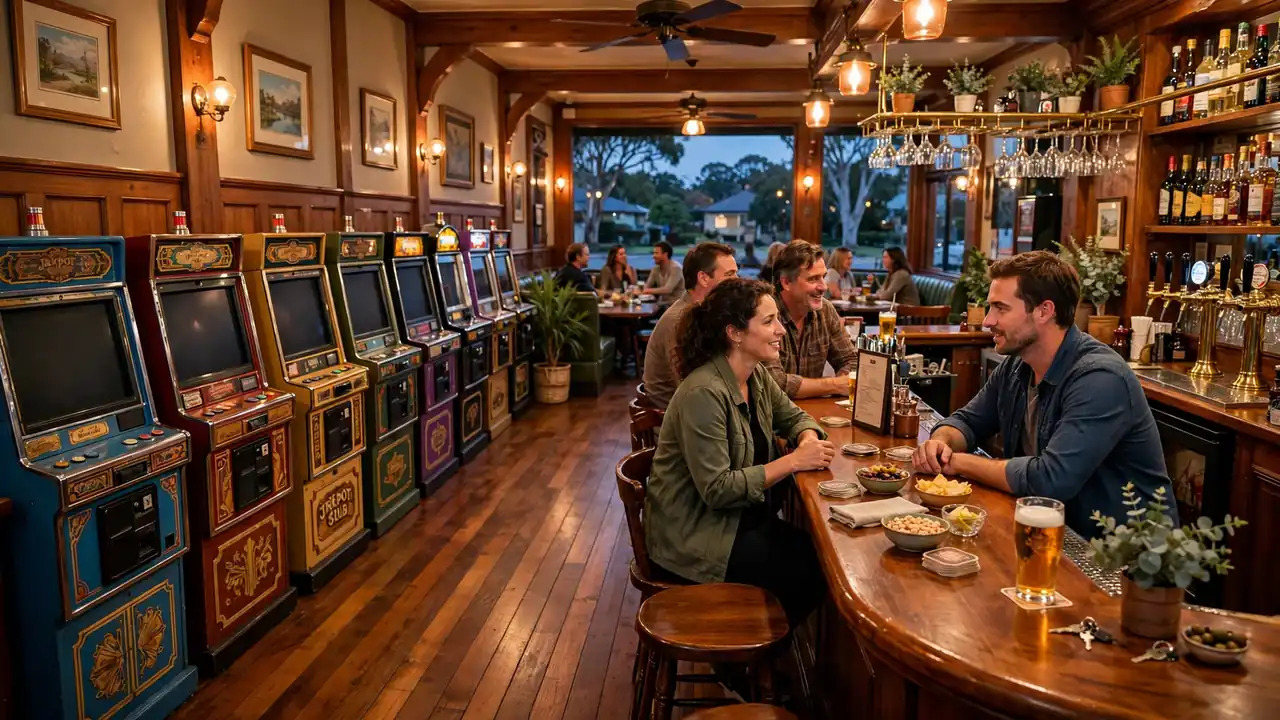
In Australia, a land-based machine is commonly called a pokie rather than a slot machine or poker machine. The language belongs to the country’s gambling culture: clubs, hotels and casinos have long made electronic gaming machines part of the ordinary social landscape. “Pokies” is therefore the natural word in Australian-facing writing. It says something about vocabulary, not jurisdiction.
That distinction matters when the same expression moves online. A page describing Big Red online pokies may use Australian terminology, quote Australian dollars, or present familiar local imagery. None of those details changes the legal character of the product. A machine does not become domestically authorised because its label sounds as though it belongs behind the lounge-room wall of an Australian club.

What “Big Red” Describes
The phrase can be read in several ways, depending on the platform using it. It may identify a named pokie, a group of games with a red-themed design, or a casual description of a prominent title. Without a confirmed game specification, “Big Red” should not be treated as evidence of a particular provider, RTP, volatility profile, jackpot structure or bonus feature.
That restraint is useful because online gambling language is fond of turning decoration into information. A red colour scheme can suggest heat, luck or old-fashioned mechanical drama; it cannot establish how a game works. Nor does the word “Big” prove that the stakes, prizes or variance are larger than those of another pokie. Branding is theatre. The mathematics remains elsewhere.
The phrase “online pokies big red” also reverses the usual order of English words without changing the underlying subject. It points to online gambling content presented for an Australian audience, not to an official product class recognised by Australian regulators. The same applies to “Big Red pokies online”: the wording identifies a theme or title in a search context, while the legal status depends on who provides the service and where.
The Australian Legal Position
The Interactive Gambling Act 2001 is the main federal law governing online gambling in Australia. Under that framework, online casino games offered to people in Australia are prohibited interactive gambling services. Pokies fall within that category, alongside other online casino products.
Legal Restriction Online casino pokies are prohibited interactive gambling services for people in Australia under the Interactive Gambling Act 2001.
The practical result is direct: real-money online casinos cannot lawfully offer pokies to Australian residents as an Australian-facing gambling service. There is no Australian licence for online pokies, and no such licence has ever existed. A website may describe itself as an Australian online casino, display Australian language, or accept Australian visitors, but those features do not create a domestic casino authorisation.
Australia’s gambling system is not a single neat counter with one national licence handed across it. Different forms of gambling are regulated through federal and state or territory arrangements. Licensed bookies may offer permitted sports and racing wagering, while lotteries and keno also sit within lawful gambling categories. Online casino pokies are different. They are prohibited from being offered to people in Australia.
The legal line is therefore attached to the product and the provider, not to the nickname used for it. Calling a game a pokie rather than a slot does not make it legal. Calling it Big Red does not make it legal. A local-looking interface does not make it legal.
What the Law Means for Players
The Interactive Gambling Act targets providers rather than individual players. Australians are not prosecuted under the Act merely because they place bets at an offshore site. That does not turn an offshore casino into an Australian-licensed operator, nor does it provide the protections attached to locally regulated products.
This difference is easy to miss in ordinary commercial language. “Available to Australians” can describe technical access, not lawful domestic supply. A person may encounter a website that accepts Australian visitors while the service itself remains outside the Australian licensing framework. Access and authorisation are separate facts.
That separation also explains why the phrase Big Red pokies Australia can be misleading if read too quickly. “Australia” may indicate the intended audience, language, currency or marketing style. It does not demonstrate that the game is approved for local online casino play. The country name is not a regulatory stamp.

Why the 2026 Context Matters
In 2026, the central issue is not whether a Big Red title can be made to look Australian. It is whether online pokies can be legally offered to Australian residents by a domestically licensed casino. They cannot. The country has no Australian online-pokies licence to check, and no public domestic casino register that could transform a prohibited product into a permitted one.
That leaves a vocabulary with two faces. On land, “pokies” is an ordinary Australian term for electronic gaming machines. Online, the same word may be used by offshore operators seeking Australian attention. The language travels easily. The legal permission does not.
A red title, a familiar accent and a national label can make a website feel close to home. Regulation is less sentimental. It asks who is providing the service, what kind of gambling product is being offered, and whether the law permits that offer. Everything else is set dressing.
Playing Big Red Pokies for Free or Real Money
The choice between free play and real money changes the consequences of a spin, not the underlying game. A demonstration version can show the reels turning, symbols landing and features activating without creating a cash balance. A paid version adds deposits, withdrawals and financial exposure. The mathematics does not become more generous merely because money has entered the picture.
That distinction matters with Big Red pokies, a name that may describe a particular theme, game family or the way an operator presents a pokie. The label does not establish licensing, fairness or payment protection. “Pokies” is the Australian word; online casinos elsewhere may call the same kind of product slots. The vocabulary travels more easily than the legal arrangements.
Provides a risk-free setting for reading the reels and learning the controls without financial exposure.
Adds deposits, withdrawals, and financial risk to the same underlying game mathematics.
What remains the same in free play
When Big Red pokies are available in a free mode, the useful comparison is with the game’s structure rather than with a possible cash result. The reels, paylines, symbols, bonus features and betting controls are the elements worth observing. The demonstration balance is only a display mechanism. It is not a dormant winnings account waiting to be converted.
Online pokies and slot machines use the same reels, RTP and volatility, differing only in local terminology. In practical terms, a free version can reproduce the rhythm of a paid game while removing the financial consequence. It cannot turn a session into income, and a large demonstration win is not evidence that a real-money session would produce the same outcome.
This is where free play has a modest but legitimate use. It can show whether the interface is understandable, whether the stake controls behave as expected and whether a feature is frequent or merely dramatic when it appears. It can also reveal how a game communicates wins, losses and bonus events. That is information about presentation and mechanics, not a forecast.
The boundary is plain. Free play is entertainment or inspection. Real money is a financial transaction.
What real-money play adds
Playing Big Red pokies for real money introduces a separate layer of risk around the same game. A punter is no longer handling an abstract balance but funds that can be lost, withdrawn or tied up in the conditions of an operator’s account. The emotional weight changes quickly: a spin that was amusing in demo mode can become irritating, urgent or persuasive when every result has a price.
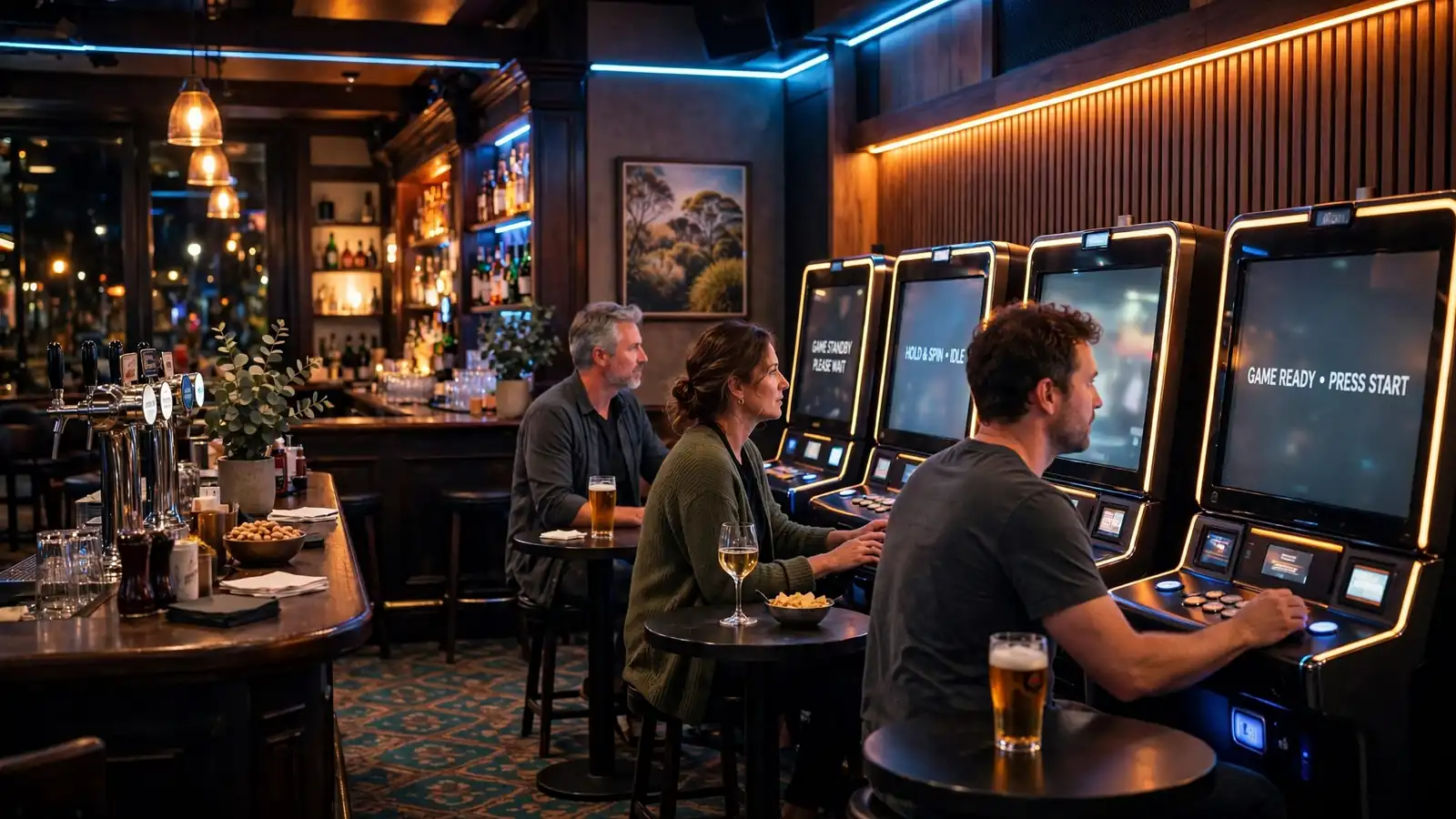
Most online pokies allow bets ranging from a few cents to hundreds of dollars per spin. That broad span does not make every stake sensible for every bankroll. It simply describes the range that can exist across games and platforms. A lower stake reduces the amount exposed on each spin; it does not improve the odds, alter the reels or make a losing sequence “due” to end.
Real-money play also makes the practical details matter: the displayed currency, the available payment route, account verification and the conditions attached to withdrawals. Those are separate from the pokie’s design. A game may function identically in free mode and paid mode while the surrounding account process is entirely different.
The game remains random. The wallet does not.
RTP is not a session promise
RTP, or Return to Player, is a long-term theoretical average. It does not guarantee the result of an individual session, whether that session is free or paid. Treating RTP as a personal refund percentage is a common mistake because the label looks more immediate than it is.
A theoretical average needs a very large number of outcomes before its meaning becomes meaningful at all. It says nothing reliable about the next spin, the next few spins or one evening with a particular pokie. A demonstration session can produce an impressive run without proving that the game is favourable. A paid session can lose quickly without disproving the published mathematical model.
RTP therefore belongs in the description of the game, not in a promise about the bankroll. It is a statistical property, not a timetable.
Volatility changes the shape of results
Volatility describes how results tend to arrive. High-variance pokies pay out less frequently but in larger amounts, while low-variance pokies pay out more often in smaller amounts. Neither setting removes randomness, and neither makes a real-money session predictable.
Volatility Rhythm High-volatility games may result in longer quiet stretches, while low-volatility games tend to produce more frequent, smaller hits.
The difference can be easier to notice in a demo because the balance is not under pressure. A high-variance game may feel uneventful for a long stretch before a larger result appears. In a paid session, that same pattern can make losses feel more severe because the waiting period is funded with actual money. A lower-variance game may show smaller results more regularly, but regular small wins do not guarantee that the overall balance will rise.
Volatility is not a ranking of quality. It is a description of the ride. Some people mistake a dramatic feature for evidence of better value; the reels are less sentimental than that.
Choosing between the two modes
Free play suits a decision about familiarity: how the game looks, how its controls work and whether its pace is tolerable. Real-money play is a decision about accepting financial exposure. The first can be made without risking a deposit. The second cannot be disguised as an extended demonstration.
No pattern bridges the gap. Each spin on a pokie is independent, and the previous result has no bearing on the next outcome. A sequence of losses in free mode does not make a paid spin more likely to win. A run of wins in demo mode does not carry across to a cash balance. The reels have no memory of the punter’s patience.
For that reason, free Big Red pokies and real-money Big Red pokies should be treated as two uses of the same game, not two stages of a strategy. One permits observation without financial stakes. The other turns the same random process into a money decision. The mechanics may stay put. The consequences do not.
How to Play Big Red Pokies Without Chasing Patterns
Playing Big Red pokies is mostly an exercise in reading what is already on the screen. The reels may carry a theatrical name and a bright Australian flavour, but the useful questions are plain: what is the stake, where are the paylines shown, which symbols trigger features, and how does the spin control work?
Read the interface before spinning
A pokie screen normally separates the essential controls from the decorative noise. The stake control sets the amount committed to each spin. The paytable explains symbol combinations and may show how bonus features are activated. The balance displays the funds available for play, while the spin button starts the next round.
Those labels deserve more attention than the animation. A fast reel sequence can make a result feel dramatic, yet the information governing the wager is usually fixed in the interface. The paytable is therefore the sensible place to begin, particularly when a game uses unusual symbols or a feature that is not obvious from the main screen.
The stake should be treated as a decision made before the spin, not as a reaction to the previous one. Raising it after a loss does not repair the loss. Lowering it after a win does not preserve a special advantage. It only changes the amount attached to the next independent outcome.
What a spin can and cannot tell
Every spin on a pokie is independent. The previous result has no bearing on the next outcome. A sequence of misses does not make a win “due”, and a recent payout does not make another payout less likely. Reels do not remember disappointment. They do not become generous because someone has been patient.
This is where pattern-hunting becomes expensive. A punter may notice repeated symbols, near misses, or a run of similar outcomes and turn those observations into a theory. The theory can feel persuasive because human attention is good at finding shapes in random events. It is not evidence that the next spin has changed.
Smart Play Routine
The same applies to timing. Pausing between spins, pressing the button at a preferred moment, or changing the stake after a particular symbol cannot influence a properly random outcome. The ritual may make the session feel orderly. It does not make the machine negotiable.
RTP is not a session promise
RTP, or Return to Player, is a long-term theoretical average. It is not a forecast for one session, one evening, or one fortunate run of spins. A game can have a published RTP while individual results move sharply away from that figure.
Volatility adds another layer to the experience. A higher-volatility game tends to produce less frequent but larger payouts; a lower-volatility game tends to produce more frequent, smaller payouts. Neither description predicts the next spin. It describes the general shape of results over a much longer period, not a timetable for a particular feature or win.
That distinction matters when interpreting the balance. A losing sequence is not proof that the game is “cold”, and a winning sequence is not proof that it is “hot”. The balance records what has happened. It does not reveal what must happen next.
A steadier way to play
A practical routine is deliberately unglamorous:
- Check the stake and confirm what one spin costs.
- Read the paytable and feature conditions.
- Keep the chosen stake separate from hopes about recovering losses.
- Treat each result as an outcome, not a signal.
- Stop when the session limit or planned time has been reached.
Where a licensed Australian-facing platform offers the game, its random number generator is required to be independently audited. That supports confidence in the mechanism, not confidence in a particular result. Fair randomness is still randomness.
The reels offer spectacle; the controls offer information. Confusing the two is how a simple spin acquires a fictional memory.
Big Red Pokies for Real Money: The Australian Legal Line
The phrase “Big Red pokies for real money” sounds straightforward, but in Australia it crosses a legal boundary that is easy to miss. “Pokies” is the familiar local word for electronic gaming machines. It does not mean that an online game is Australian-licensed, locally regulated, or protected by Australian casino rules.
The central rule comes from the Interactive Gambling Act 2001. Real-money online casinos offering pokies to people in Australia are prohibited. There is no Australian licence for online pokies, and none has ever existed. That absence matters more than the language used on a website, the currency shown at the cashier, or the appearance of Australian symbols in a game’s branding.
Australian-facing is not Australian-licensed
An offshore operator may describe its service as being for Australian punters, display Australian dollars, or accept familiar local payment methods. Those features indicate a market focus, not an Australian gambling licence. The same applies to labels such as “Aussie pokies” or “real money pokies”. They describe presentation and intended audience; they do not create domestic approval.
An operator may instead hold a licence from an overseas jurisdiction. That is a separate legal arrangement, governed by the rules of the jurisdiction that issued it. It should not be presented as an Australian online-casino licence, because no such licence exists.
This distinction is unusually important in a market where the vocabulary feels local while the legal framework says otherwise. A kangaroo on the homepage cannot perform regulatory work.
Licensing Attention An Australian-facing website or local language does not mean the operator holds a domestic Australian casino licence.
Who the Interactive Gambling Act targets
The Act is directed at providers that offer prohibited interactive gambling services to Australians. Pokies offered online for real money fall within that category. Enforcement therefore targets the operator, rather than treating the individual punter as the prohibited service provider.
Australians are not prosecuted under the Interactive Gambling Act simply for placing bets at offshore sites. That does not turn an offshore casino into a domestic licensed venue, nor does it guarantee access, withdrawals, dispute resolution, or Australian consumer protections. It only identifies where the statute places its enforcement focus.
The practical legal line is therefore precise: no Australian-licensed online casino offers real-money pokies, and the use of Australian language does not alter that fact. Free play is a different question, but real-money online pokies cannot be presented as a locally licensed Australian gambling product.
Big Red Pokies Download: What Actually Needs Installing
A request for a Big Red pokies download can describe two different things: opening a game in a browser or installing software supplied by an online casino. They are not the same arrangement, and the difference matters more than the word “download” suggests.
Browser play is often the simpler route
Many casino games open directly in a mobile or desktop browser. In that setup, the game loads from the operator’s website, while the device keeps no dedicated casino program. An app icon may therefore be unnecessary. Browser access also makes it easier to leave the site without granting an unfamiliar application additional permissions.
That convenience should not be mistaken for legal approval. A polished website, a mobile layout, or a game that loads quickly does not create an Australian online-pokies licence. No Australian licence for online pokies exists, and none has ever existed. The software may be accessible; the product is not thereby domestically authorised.
When an installation may appear
Some operators offer optional desktop software or a mobile application. The stated purpose may be faster loading, saved preferences, or a more controlled interface. None of those features proves that the program is genuine. The important checks concern the operator behind it, the source of the file, the permissions requested, and the clarity of the account and withdrawal terms.
An installation file obtained from an unofficial mirror is a different risk from a program delivered through the operator’s verified website or an established app store. Strange redirects, demands to disable security tools, unexplained permissions, or pressure to install before the rules are visible deserve a firm answer.
No installation.
Security is part of the access method
A legitimate platform should explain how personal and financial information is protected, how identity checks work, and what conditions apply before a withdrawal. These details belong to the service, not merely to the game. A familiar Australian theme, the word “pokies”, or a convincing kangaroo graphic says nothing about consumer protection.
Where a platform presents itself as licensed for Australian-facing play, its claims still need scrutiny. Licensed Australian-facing platforms are required to use independently audited random number generators, but an Australian-facing presentation is not equivalent to an Australian casino licence. The distinction is awkward because websites prefer smooth branding to legal footnotes. The footnotes remain the useful part.
A browser shortcut, downloadable client, or phone application changes the route into a game. It does not change the regulatory line. The safest technical choice is the one that avoids unknown files and leaves the operator’s legal position, security practices, and account conditions visible before any software is installed.
Software Installation Many players prefer browser-based play because it avoids downloading unknown files and doesn’t require dedicated casino software on the device.
Big Red Kangaroo Pokies and the Australian Imaginary
The kangaroo is one of Australia’s most exportable symbols: instantly recognisable, slightly comic, and useful whenever a product wants to borrow a little local colour. Put it beside “Big Red” and the image becomes even more loaded. The red kangaroo is not merely an animal in a landscape; it is a national emblem, a sporting mascot, a road sign, and a convenient shortcut to an imagined Australia of wide spaces, dust, distance and uncomplicated bravado.
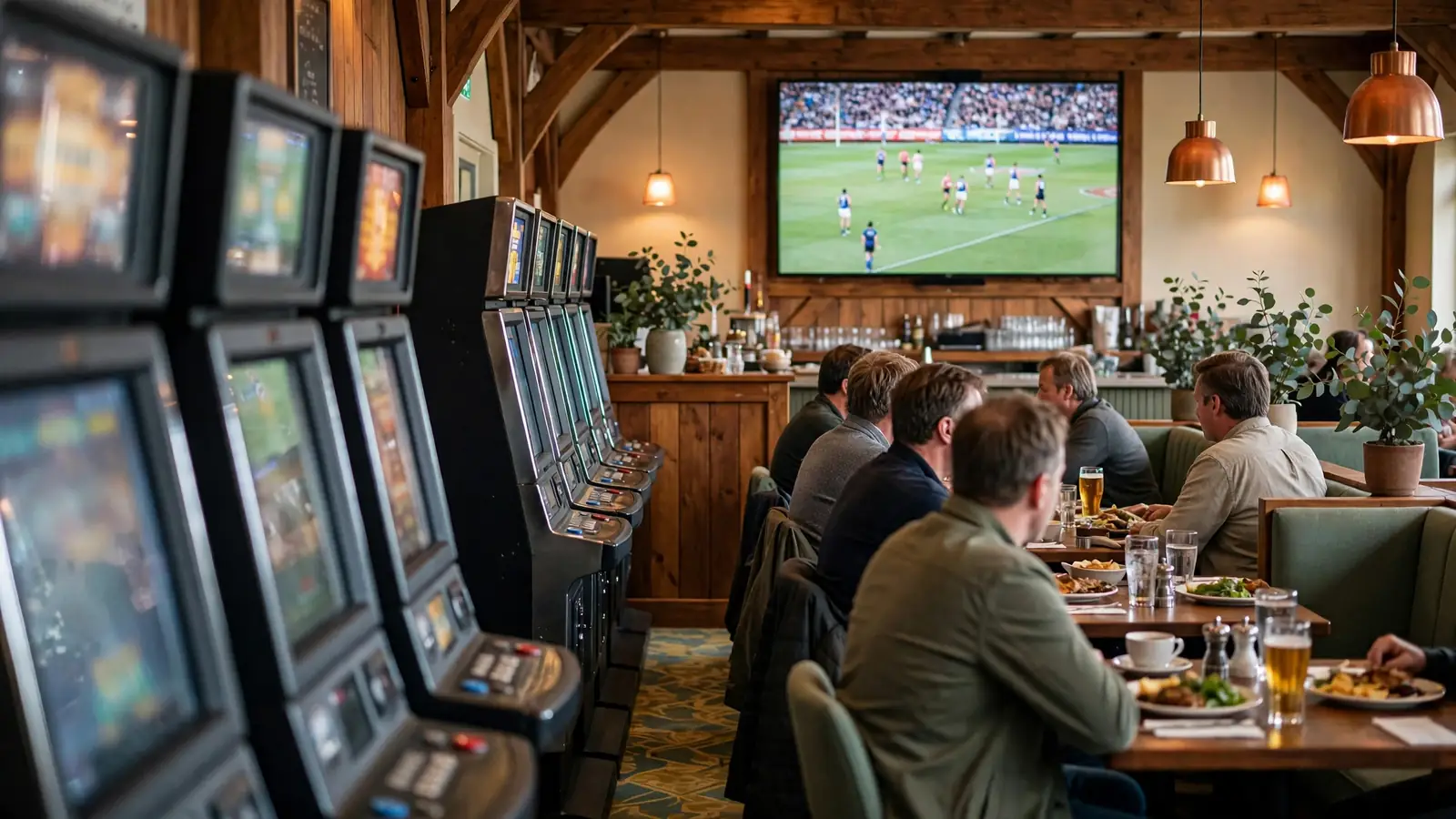
That symbolism explains why a Big Red Kangaroo pokie may sound more locally grounded than a game with an abstract title. The vocabulary does part of the work. In Australia, pokies is the natural everyday term for electronic gaming machines, particularly in pubs, clubs and casinos. “Slots” is understood, but carries a more international flavour. A title built around “pokies” and a kangaroo therefore feels geographically specific even when the game itself is supplied and operated from elsewhere.
The distinction matters. Australian imagery is presentation, not regulation. A kangaroo in the artwork does not turn an offshore game into an Australian product, and the word pokies does not signal an Australian licence, domestic oversight or local consumer protection. There is no Australian licence for online pokies, and none has ever existed. Online casino games, including pokies, are prohibited from being offered to people in Australia.
The cultural borrowing is rather efficient. A provider can evoke the country without entering its legal framework. The landscape becomes a backdrop; the local noun becomes a label. Neither changes the underlying status of the service.
Nor does the name alter the mathematics. Online pokies and land-based slot machines use the same basic concepts of reels, RTP and volatility, differing here in terminology and presentation rather than in some magical Australian mechanism. A kangaroo theme cannot make outcomes more favourable, and “Big Red” cannot make a random game patriotic. The outback remains decorative.
There is also something revealing in the way such branding works. Australia’s gambling vocabulary grew around communal venues and familiar machines, while online casino language often arrives through international software catalogues. “Pokies” domesticates the description; the imagery domesticates the mood. The legal position, less picturesque, refuses both gestures.
So the kangaroo can signify Australia without proving anything about the operator behind the screen. It may make a game feel familiar, but familiarity is not authorisation. A neat emblem. A very different matter.
Big Red Pokies Games: The Wider Slot Landscape
The phrase Big Red pokies games points less to a single, neatly fenced category than to a way of browsing. A punter may arrive looking for red branding, Australian imagery, or a familiar cabinet style, then move sideways into games built around fishing, explorers, jewels, animals, or railway heists. The surrounding landscape is broad because the word pokies describes the local format, not one universal theme.
Terminology Pokies (Australia) / Slots (International)
Core Mechanics Reels, RTP, and Volatility
Regulatory Status Online pokies are prohibited in Australia
Online pokies and slot machines use the same reels, RTP, and volatility. The vocabulary changes with the country; the underlying mathematics does not. A title dressed in outback colours is not made more Australian by its artwork, just as a game with an Egyptian temple does not become ancient history. Marketing is an enthusiastic costume department.
Recognisable names around the category
Several established titles show how differently the same basic format can be presented:
- Big Bass Bonanza — a fishing-themed game whose identity is built around catches, water, and the promise of a sizeable haul.
- Book of Dead — an Egyptian adventure title using ruins, explorers, and archaeological imagery.
- Starburst — a bright space-themed game with a cleaner, more colourful visual language.
- Buffalo King Megaways — an animal-themed title associated with the expanding-reel Megaways format.
- Money Train 4 — a darker, feature-heavy train-heist setting that sits at the more dramatic end of the visual spectrum.
- Gonzo’s Quest — an adventure presentation centred on a searching, comic explorer.
- Sweet Bonanza — confectionery imagery and an intentionally playful tone.
- 5 Dragons — a fantasy-style dragon theme with a more traditional casino-game atmosphere.
These names do not form a ranking, and none is automatically a substitute for a Big Red title. They are landmarks on the same map: useful for recognising how providers separate games through setting, presentation, and anticipated rhythm.
Volatility as the dividing line
Theme catches the eye; volatility changes the texture of play. High-variance pokies tend to pay out less frequently but in larger amounts. Low-variance pokies tend to produce wins more often, but in smaller amounts. That distinction matters more than whether the screen shows a buffalo, a bass boat, a dragon, or a red kangaroo.
Bet ranges also differ between games. Most online pokies allow stakes from a few cents to hundreds of dollars per spin, although the available controls belong to the individual title and platform. A brightly coloured game can therefore sit beside a sombre one while offering an entirely different betting scale.
The result is a category shaped by two overlapping languages: local speech calls them pokies, while international catalogues often call them slots. The reels recognise no passport. Only the packaging does.
Big Red Demo Pokies: Testing Features Before Stakes
A demo version of Big Red pokies is best treated as a viewing room, not a rehearsal for profit. It allows the game’s structure to be examined without turning every observation into a financial decision. That distinction matters. The colours may be loud, the symbols familiar, and the reels agreeably dramatic, but entertainment design is not evidence of a favourable result.
What demo mode can reveal
The first useful inspection is the control panel. A demonstration game shows where the stake is changed, how a spin is started, whether paylines or ways are displayed, and where the paytable sits. These details are easy to overlook when attention is fixed on the central animation. In demo play, there is time to read them properly.
The paytable deserves particular attention. It explains symbol values, winning combinations, and any feature symbols used by the game. If a bonus round, wild symbol, scatter, or expanding symbol appears in the rules, demo mode provides a quiet place to see how the feature is presented. It does not prove how frequently the feature will occur. It merely makes the advertised mechanics less mysterious.
A sensible inspection follows the full cycle:
- choose a stake setting;
- check the number and arrangement of paylines;
- read the symbol and feature descriptions;
- observe the result display and win presentation;
- note how the game handles free spins or bonus sequences, if included.
The point is not to produce a lucky sample. It is to understand what the interface is doing.
Reading rhythm without inventing patterns
Demo spins can also show the game’s rhythm: whether wins appear as small interruptions, whether feature sequences take over the screen, and how quickly the interface moves from one result to the next. That rhythm can influence a punter’s sense of momentum, which is precisely why it should be observed with some suspicion.
Each spin is independent. A previous result has no bearing on the next outcome. A long stretch without a visible win does not make a win “due”, and a run of attractive results does not create a signal to continue. The reels have no memory. Conveniently, neither does the machine’s conscience.
RTP, or Return to Player, is a long-term theoretical average rather than a promise for a demo session or a later paid session. Volatility also helps describe the shape of results: high-volatility pokies tend to pay less frequently but in larger amounts, while low-volatility pokies tend to produce smaller payouts more often. Neither label predicts the next spin.
The most useful demo session ends with clearer knowledge of the rules, controls, and presentation. It should not be used as proof that a deposit will perform in the same way. That is evaluation, not divination.
Is online pokies real money legal in Australia?
No. Real-money online pokies are prohibited from being offered to people in Australia under the Interactive Gambling Act 2001, although Australians can legally play at licensed offshore casinos.
Are online pokies real money games safe?
They can involve financial and regulatory risks, especially on offshore sites. Licensed Australian-facing platforms are required to use independently audited random number generators, but players should also check licensing and responsible-gambling protections.
What does RTP mean for a single session?
RTP does not predict the result of a single session. It is a long-term theoretical average, so one session may produce wins, losses or an unusually large bonus sequence.
What are the new gambling laws in Australia?
The Interactive Gambling Act 2001 remains the main law governing online gambling, and online pokies cannot legally be offered to Australians. Since 11 June 2024, credit cards, credit-related products and cryptocurrency have also been banned as payment methods for online wagering.
How to evaluate offshore pokies sites?
Check whether the site operates under a recognised offshore licence, uses independently audited random number generators, clearly states its terms and provides responsible-gambling protections. Also review deposit, withdrawal and payment conditions before playing.
What are the key features of licensed casinos?
Key features include a valid licence, independently audited random number generators, clear terms, responsible-gambling tools and transparent payment conditions. Players should verify these details before depositing.
Who regulates the Australian gaming industry?
Online gambling is primarily governed at federal level by the Interactive Gambling Act 2001. State and territory authorities also regulate permitted gambling products such as land-based casinos, wagering and lotteries.
Published by the Betting Top 10 Australia team.