

Responsible Gambling in Australia: Laws and Support
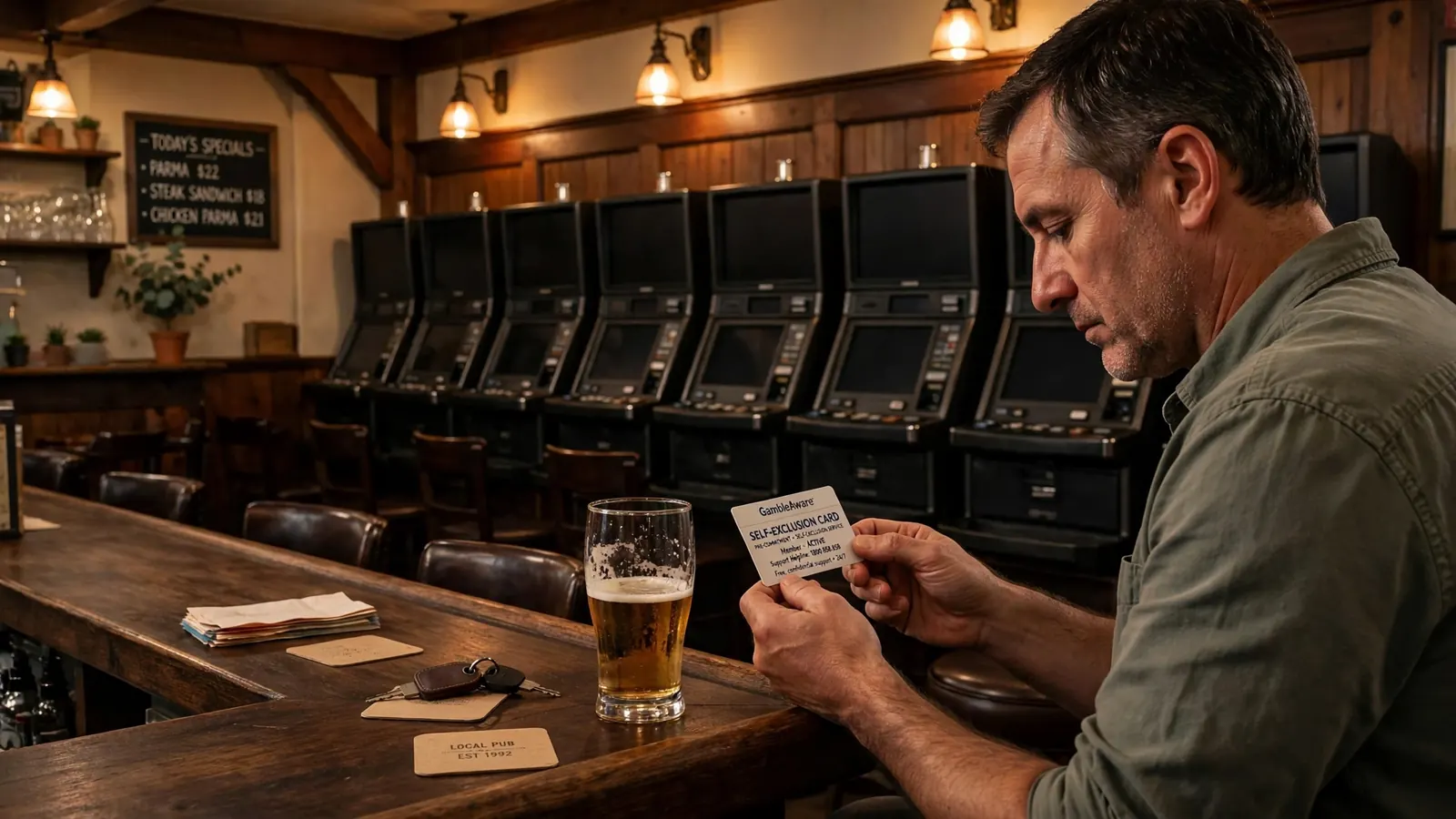
Australia has a peculiar relationship with gambling. A country of twenty-six million people drops more money per capita on wagers than almost anywhere else, and the state — which taxes the proceeds — has spent two decades building machinery to contain what it collects. Pokies in pubs, TAB at the races, a wagering app in every pocket: the pastime is woven into the architecture of ordinary life. Which makes the safety mechanisms worth knowing precisely, not vaguely. This page sets them out.
What the law actually permits
A correction first, because the internet is reluctant to make it. Under the Interactive Gambling Act 2001, providing online casino games in Australia is illegal. There is no domestically licensed real-money online casino for Australian players. Licensed Australian operators are limited to sports and race wagering — that is the whole menu. Anything advertising online pokies, roulette, blackjack or online poker to Australians is offering a prohibited service, not a grey one.
Offshore casinos exist and are happy to take the money. Some hold licences from Malta or Curacao, and those authorities keep public registers where a licence number can be checked against its status. But a foreign licence does not authorise an operator to serve Australian customers, and no offshore casino should be mistaken for a legal option here. The ACMA publishes a register of Australian-licensed interactive wagering service providers, and it is the only list that matters for legality; a licence number can be verified by cross-referencing it on the regulator’s official website.
The age threshold is simple: 18 for commercial gambling in Australia.
How to tell if gambling has stopped being entertainment
Gambling is not a source of income and cannot be a solution to money problems. The maths of every licensed product bends one direction, and the longer play continues, the more reliably it bends. When gambling starts functioning as a wage substitute or an escape from bills, that is not a strategy failing — that is the earliest reliable warning sign.
Others are observable rather than felt:
- Setting a limit and breaking it repeatedly; limits exist to be hit, not renegotiated at midnight.
- Chasing losses — returning specifically to win back what was lost, which is the mechanism that converts a bad night into a bad year.
- Borrowing to play, or playing with money earmarked for rent, bills, groceries.
- Concealing the extent of play from family, or lying about it outright.
- Restlessness or irritability when cutting back.
- Neglecting work, study or relationships in favour of gambling.
One of these is a bad week. Several together are a pattern, and patterns are what these mechanisms below were built for.
The tools Australia has built
BetStop — the National Self-Exclusion Register
The law changed in 2019 to allow a national self-exclusion register, and BetStop (https://www.betstop.com.au) is the result: one registration that excludes a person from all Australian licensed online and phone wagering services in a single step. No need to contact each operator separately, which was once the labour that made self-exclusion impractical.
The periods run from a minimum of three months up to a lifetime. The register’s own figures say something about the people who use it: around 40 per cent choose lifetime exclusion, fewer than 20 per cent take the three-month minimum, and more than 14 per cent have extended or reactivated their exclusion — evidence that the first decision tends to hold, and often deepen. One honest limitation: BetStop does not cover offshore casino operators. It binds the licensed sector, not the unlicensed one.
Deposit rules
Since 11 June 2024, credit cards and cryptocurrency are banned as deposit methods for Australian online gambling. The only legal deposit routes for licensed Australian wagering are debit cards, bank transfer, PayID/Osko and BPAY. If a service offers credit-funded play, it is not merely unhelpful — it is outside the law.
The National Consumer Protection Framework for Online Wagering (https://www.aph.gov.au) binds all licensed online wagering providers to a set of consumer protections, from messaging to activity statements. It is the quiet scaffolding beneath the licensed market.
Where to get help — now, not eventually
This is the part of the page that matters more than everything above it.
- Gambling Help Online (https://www.gamblinghelponline.org.au) — free, confidential support, 24 hours a day, seven days a week. No appointment, no waiting room.
- Gambler’s Help (https://www.gamblers.help) — responsible gambling support for those who prefer talking to a person.
- The National Gambling Helpline — available 24 hours a day, every day of the year.
- Lifeline (https://www.lifeline.org.au) — mental health support, for moments when gambling is one pressure among several.
- BetStop (https://www.betstop.com.au) — the National Self-Exclusion Register, described above; the one step that removes the option while resolve is still present.
The practical order matters. Exclusion can be registered in minutes; a conversation with Gambling Help Online can happen the same night. Neither requires admitting anything to family first, and neither has a waiting list.
A closing observation
Australia regulates gambling the way a country regulates something it expects to keep: heavily, with registers, helplines, bans on credit, and a national exclusion scheme. The machinery is extensive because the need is. Using it is not an admission of weakness but the ordinary, intended function of the system — a system this country built because its residents were losing more than they could spare.
Betting Top 10 Australia keeps this page current; questions can go to [email protected]. If the situation is urgent, the helplines above answer around the clock.
Start with the phone.